

Chicago’s transportation landscape is changing, but what you see on the street and what you can actually book are two different things.
The short answer
Robotaxis are advancing quickly in parts of the country. But as of late October 2026, driverless rides are not authorized in Illinois, and there is no robotaxi service taking passengers in Chicago.
That makes robotaxis a technology to watch, not a clear and present alternative to a chauffeured ride in Chicago today.
The distinction matters. A vehicle spotted testing on city streets is not necessarily offering rides. And big developments elsewhere do not automatically mean service is about to begin here.
Where things stand
- Tesla is producing Cybercabs in Texas. So far, the vehicles produced have been deployed in Tesla’s internal robotaxi fleet, which operates in Austin.
- Texas registry data as of late October 2026 shows roughly 970 vehicles registered to Tesla’s robotaxi fleet, including 463 Cybercabs, with reporting indicating the Cybercabs are assigned to Austin.
- Tesla plans to begin selling Cybercabs to fleet operators and customers by the end of 2026 and expand public service to Dallas, targeted for November, with more cities expected by year-end. A federal investigation into compliance with safety standards for manual controls is ongoing.
- Waymo has not launched a robotaxi service in Chicago. Its vehicles are mapping city streets with human drivers; they are not carrying passengers.
- Illinois has not authorized driverless rides. Proposed bills that could establish a pilot program remain stalled in committee.
That’s meaningful progress for the technology nationally. It is not the same as an available Chicago service.
A Cybercab sighting isn’t a Chicago robotaxi ride
Some Cybercabs have been seen testing on Chicago streets. It’s understandable to wonder whether driverless service has quietly arrived.
It hasn’t.
The Cybercabs seen testing here are equipped with steering wheels and pedals for human operation. They are not the fully autonomous vehicles providing rides in other states. Likewise, Waymo’s Chicago activity is street mapping, not a public passenger service. NBC Chicago reported on Waymo’s mapping activity.
This is a useful distinction for travelers: a test vehicle on a route is not evidence that a ride can be requested, that passengers are being carried, or that local driverless service has been authorized.

Our downtown Aviator: a real Fiona’s Carriage fleet vehicle, not a robotaxi illustration.
The technology is moving. Chicago’s rules still matter.
Tesla’s Texas activity shows that the category is moving beyond a concept. Cybercabs are being produced, and Texas registry data provides a snapshot of the scale of Tesla’s fleet. Tesla has also outlined plans to begin sales to fleet operators and customers by year-end, with Dallas expansion underway — an unsupervised Model Y service already operates there, and Cybercabs are expected to arrive in November. A Texas DMV-data tracker provides context on the registration information.
But Chicago’s path is shaped by Illinois law as well as vehicle technology.
Driverless rides remain unauthorized in Illinois. Two proposed measures, HB4663 and SB3392, would establish a three-year pilot program for testing in specified counties. Both remain stalled in committee and did not advance during the spring session. Lawmakers may revisit them during the November and December veto sessions, but there is no set timeline for a deployment.
For now, the order of events is clear: before driverless rides can begin in Chicago, the legal framework has to change. Any operator would then need to decide whether and when to launch.
That’s why Chicago’s robotaxi outlook is a legislative question first and a technology question second.
Robotaxi regulation is not the same as chauffeur regulation
Chicago’s chauffeur-driven vehicles and luxury transportation services operate under existing livery licensing and regulations. Robotaxis would enter a different regulatory category.
That difference matters when people compare transportation options. The vehicles may share city streets, but the rules governing service are not identical, and neither are the ways people arrange and experience a trip.
If you’re planning a ride today, the practical question isn’t whether autonomous technology is advancing. It is whether a particular service is authorized and available to carry you in Chicago. As of late October 2026, driverless robotaxi service is not.
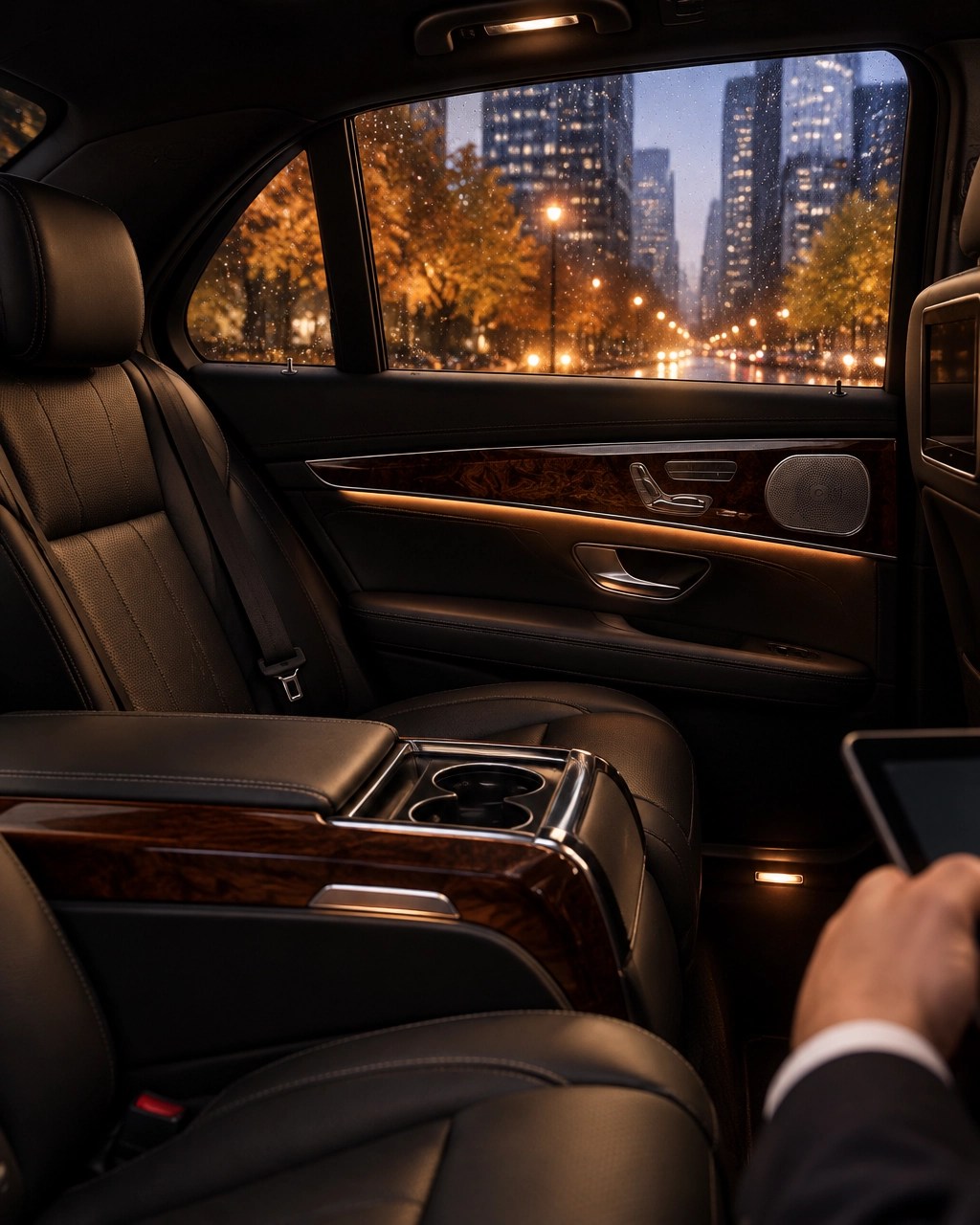
The journey is more than getting from one address to another. Comfort and a thoughtful experience matter, too.
What a chauffeured ride offers today
A chauffeured ride includes a person behind the wheel and a team coordinating the trip — from our chauffeurs to our dispatch team, working together around the details that shape your experience.
For an airport pickup, for example, flight delays can change the plan. Our team can coordinate with the chauffeur as the timing changes, so the ride is managed by people responding to the actual trip, not simply treated as a vehicle sent to a location.
That human involvement is not a claim that technology cannot progress, or that one kind of service will always be right for every traveler. It is simply what a chauffeured service offers today: a professional driver, a person accountable for the ride, and coordination between dispatch and chauffeur.
For clients choosing a black car service Chicago travelers can book now, that distinction can bring welcome clarity. Our private car service Chicago customers use for airport transfers, business travel, and point-to-point rides is arranged with a chauffeur and a team behind the details.
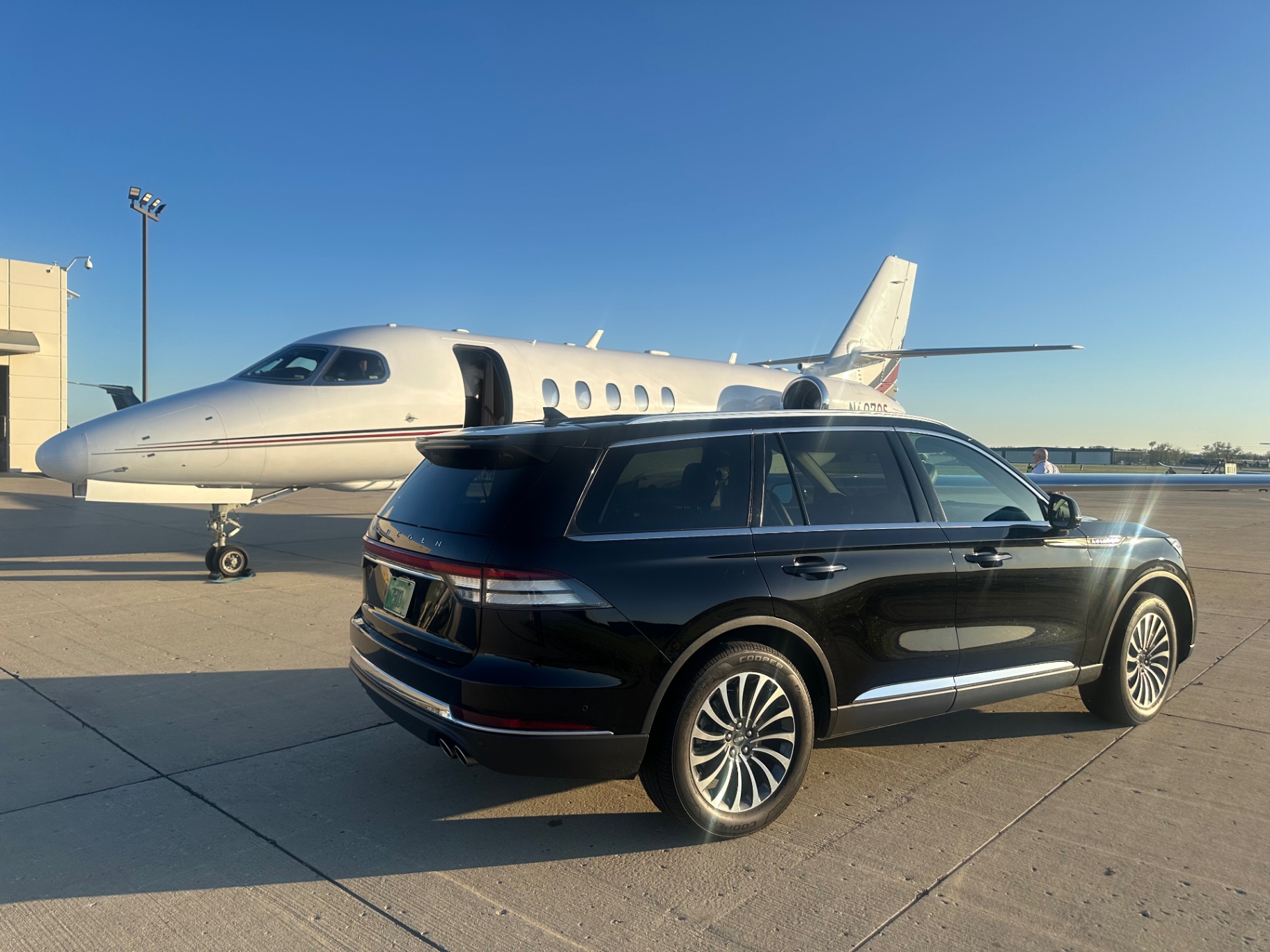
For airport transportation, our team helps coordinate the ride around your travel plans.
So, are robotaxis a clear and present threat?
Not to chauffeured service in Chicago today.
The technology deserves attention. Tesla is producing Cybercabs, its Texas robotaxi registry counts roughly 970 vehicles including 463 Cybercabs, and the Dallas expansion is already underway. Waymo is mapping Chicago streets. Those are real developments.
But Chicago does not yet have authorized driverless rides, and the vehicles currently seen testing here are human-driven. Proposed Illinois pilot legislation has not advanced, and there is no confirmed deployment timeline.
So the honest answer is: the technology is progressing nationally; a Chicago launch remains uncertain. We’ll keep watching as laws and plans develop, and we’ll share what changes when there is something concrete for local travelers to know.
Experience elegant transportation in Chicago
Fiona’s Carriage marked our 10th anniversary in September 2026. For ten years, we’ve focused on dependable service and thoughtful care, whether you’re heading to the airport, traveling for work, or making an occasion feel special.
If you need airport transportation Chicago travelers can arrange with a professional chauffeur, we’d be glad to help. Explore our services or reserve your ride when you’re ready.
And for more practical travel notes and Chicago insights, visit the Fiona’s Carriage blog.